
Beyond the boundary
Loyal to localbut embracing the globalisation of sport
Australia has always been a nation built on sport. From packed AFL and NRL games to long days following the cricket, local sporting culture remains deeply embedded in everyday life. But new fan behaviours suggest that a more global attitude towards live sport is beginning to accompany the homegrown appetite. Everyday fandom and destination events now sit alongside one another, with Australian fans adopting new behaviours around travel, spending and experience.
On Ticketmaster Sport
100+
Sports clients
15
Sports
PLUS
Global tournaments

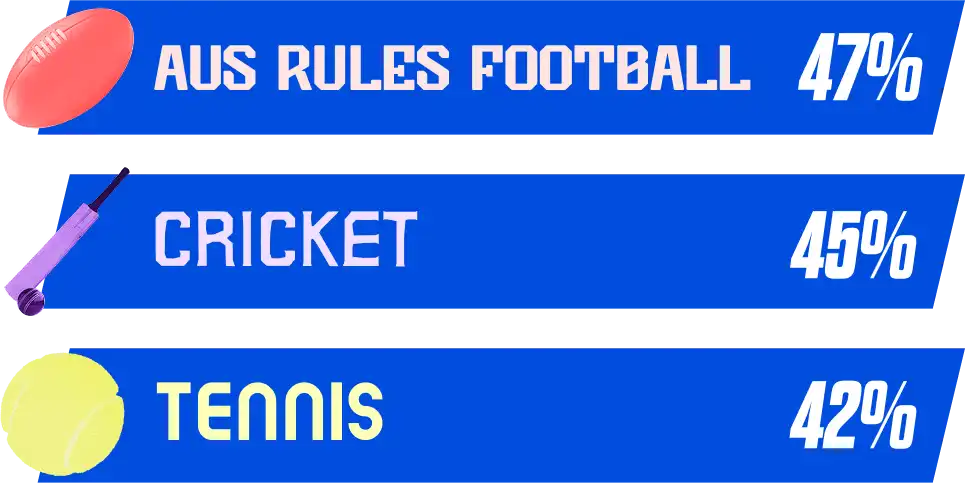
At a national level, local sport remains the centre of fandom. Australian Rules Football leads overall popularity at 47%, followed closely by cricket at 45% and tennis at 42%. These sports are not just something Australians merely watch, they help shape national identity, community and entertainment.
Most followed sports in Australia:


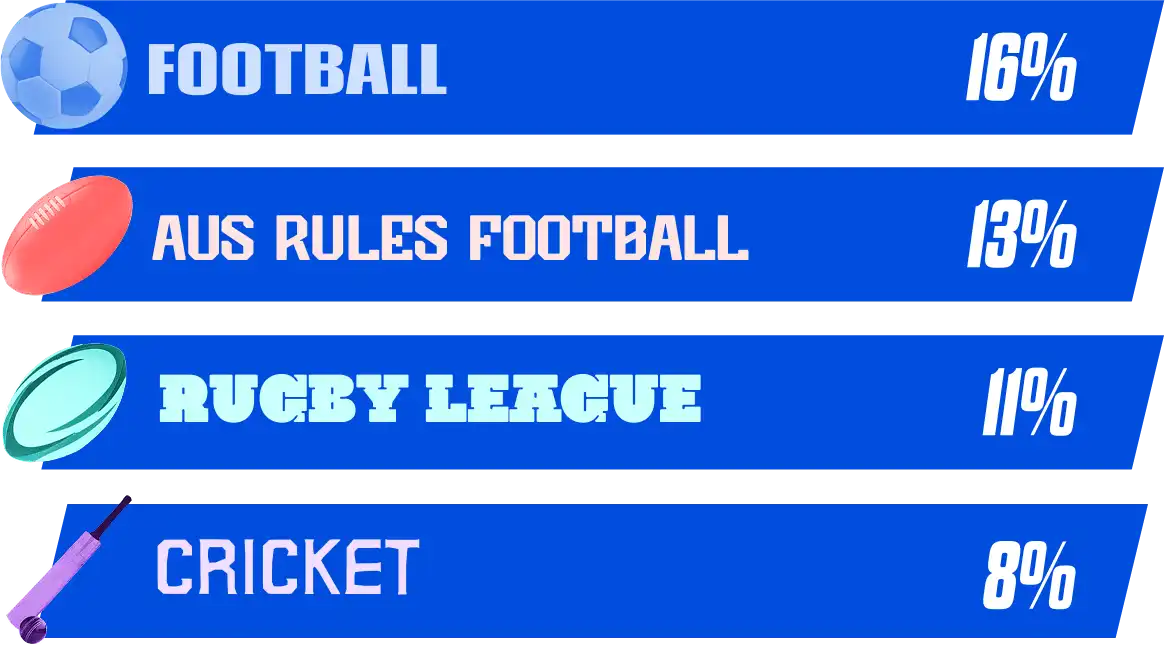
However, when fans were asked which sport they would travel furthest to watch live, Football/Soccer came out on top at 16%, ahead of AFL at 13% and Rugby League at 11%. Cricket, Tennis and Motorsport all followed at 8%. Pointing to the growing interest in international sport as an event experience worth planning, spending and travelling for.
This suggests fans are placing greater experiential value on global sporting occasions. For many fans, these events have become bucket-list experiences as much as sporting fixtures, which is reflected in the money they’re prepared to invest. The average spend per live sports experience sits at AU$481, while one in four fans would spend more than AU$600. Only 20% would cap spending at AU$100 or less. Painting a picture of a fanbase that views live sport as an experience and lifestyle worth spending for.
The Most Australian Fans would spend on a live sports experience*

Top Sports Australian Fans would be willing to travel the furthest for

The expectation around experience is ever increasing.
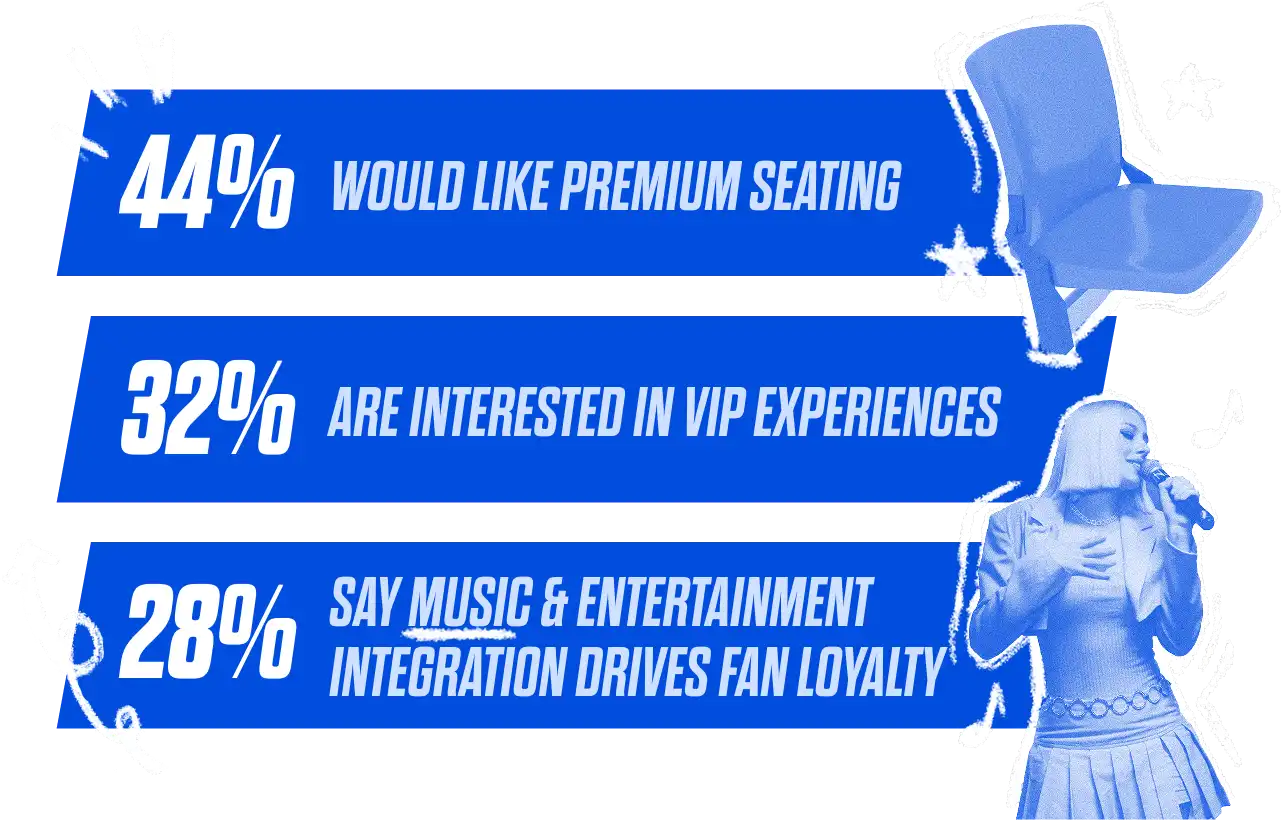
Almost half of fans (44%) say premium stadium seating would enhance their live sports experience, while 32% of fans are interested in VIP Experiences.
This reflects the broader eventisation of live sport where the game itself remains central, but convenience, comfort and premium add-ons increasingly enhance satisfaction and influence the decision to attend. In short, the event is important, but the quality of the surrounding and connected experiences now matters more than ever.
What’s behind this shift? Fans are now influenced by wider cultural and entertainment moments, their expectations shaped by other areas of live entertainment and hospitality. This means seamless technology, reduced friction, flexible food and beverage options and environments that feel elevated and worth the investment. These aren’t just a ‘nice to have’, they’re becoming essential. Social media also plays a part, with fans increasingly not only watching sport but also documenting and sharing it, particularly where an exclusive or enhanced experience is offered.
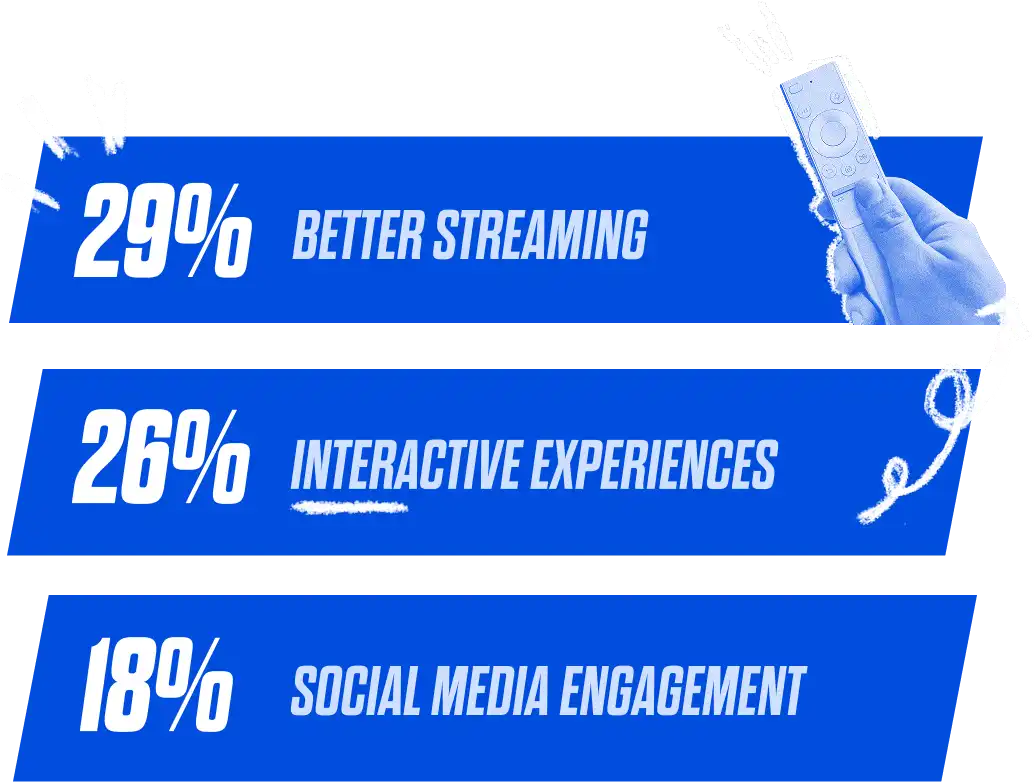
Technology is becoming a key driver
Rise of the event experience

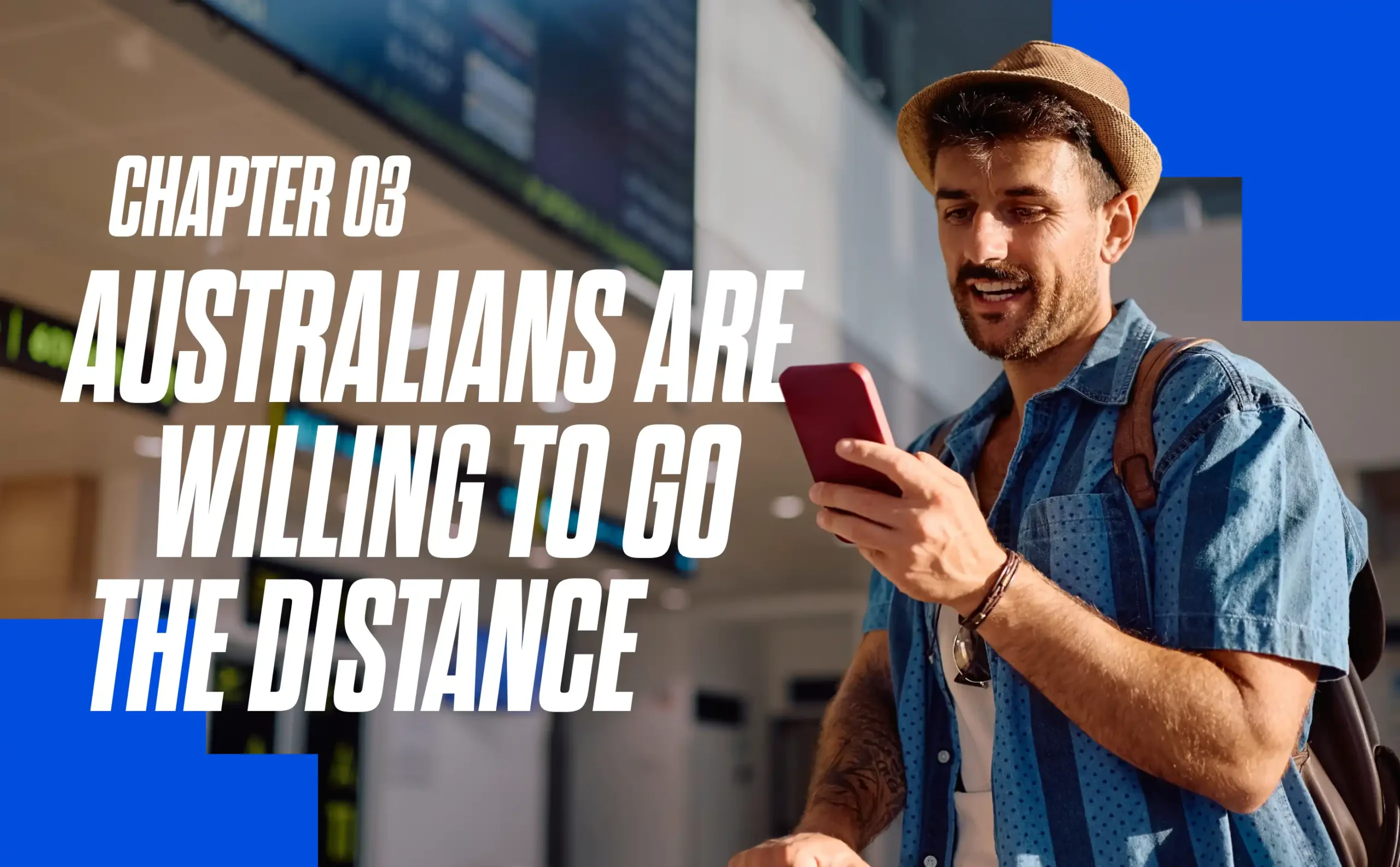
Travel patterns tell a similar story. Australian fans would travel an average of 6 hours and 59 minutes for an international fixture, while almost a quarter (23%) would travel more than 10 hours. Only 13% would limit their travel time to under two hours.
That level of commitment reinforces the idea that major global sporting events are now functioning as travel drivers in their own right. Fans are not only attending these events, but they are also building trips around them.
This trend may become even more important as Australia continues to attract major international sporting events and tournaments. Fans are demonstrating that they are prepared to invest significant time and money when the event feels worthwhile. The opportunity now exists for how sporting events can be delivered as a connected, seamless and integrated experience for fans.



How far Australian Fans would travel to see an international Fixture


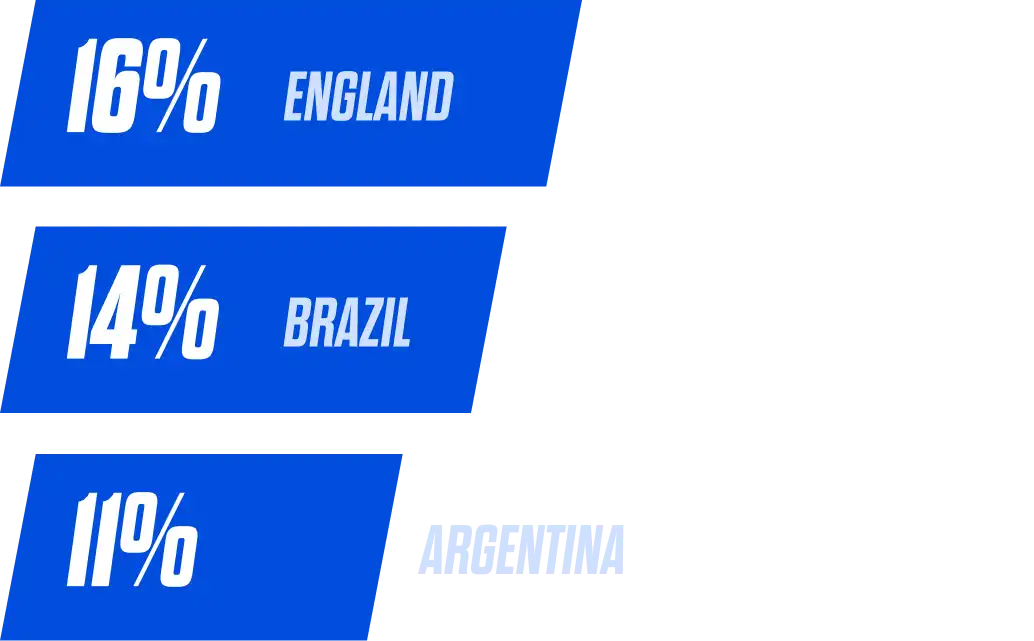
Another major insight comes from fan behaviour around international tournaments. 76% say they would support Australia at the World Cup, but fans also demonstrate flexibility if their home side leaves the tournament. England emerges as the leading fallback team at 16%, followed by Brazil at 14% and Argentina at 11%.
This shows the World Cup experience extends beyond national loyalty. Fans continue watching because they are invested in the occasion itself, they remain deeply engaged in tournaments even when their local teams are no longer competing.

Top teams Australian fans would support at the world cup if theirs was knocked out
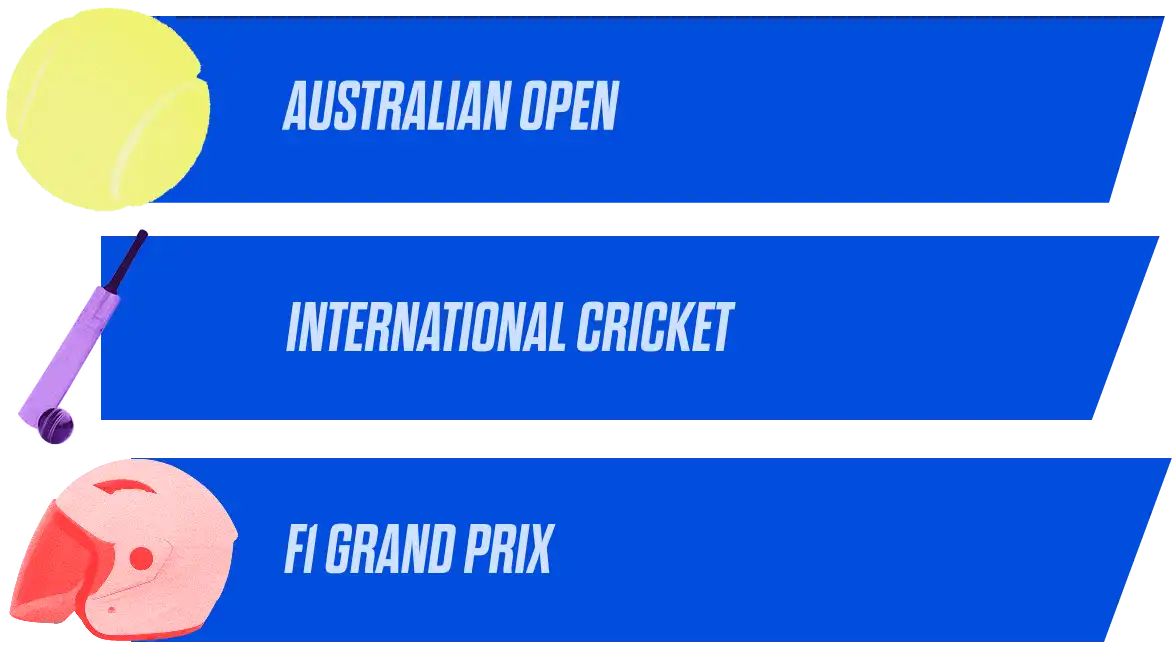
Australian events with largest amount of international purchasers
The broader picture is not one of Australian sport becoming less local. Instead, fandom is widening. Homegrown sport still drives identity, loyalty and regular engagement. AFL, Cricket and Rugby League remain central pillars of Australian sporting culture.
But alongside that, international sport is occupying a different space: one tied to aspiration, travel, experience and global connection. Fans are also showing a growing appetite for premiumisation, destination experiences and globally significant sporting moments.
The Australian live sports market is no longer simply about getting fans through the gates. It is about creating experiences that feel worth travelling for, spending on, sharing and importantly repeating as part of the new expectation for live sports experiences.

Live sport is becoming more global in the way fans discover it, follow it and experience it. To explore that shift, we asked fans across international markets about their attitudes to sport, live events and the future of fandom.
Across markets many fans are happy to invest in the immersive live experience, valuing premium seating and VIP access, whereas others place a stronger emphasis on financial and digital accessibility.
For the industry, that presents both a challenge and an opportunity: To respond to rising global expectations for live sport, while building flexible strategies that reflect the different behaviours, budgets and priorities of fans in each market.


Football remains one of the world’s most dominant sports, but local sporting identities remain just as powerful.
Sport fans who follow football



Football remains one of the clearest examples of sport’s global reach, with 84% of fans in Spain following it, alongside 81% in Mexico and 78% in the Middle East. Across these markets, it continues to act as a powerful cultural connector with broad mainstream appeal.
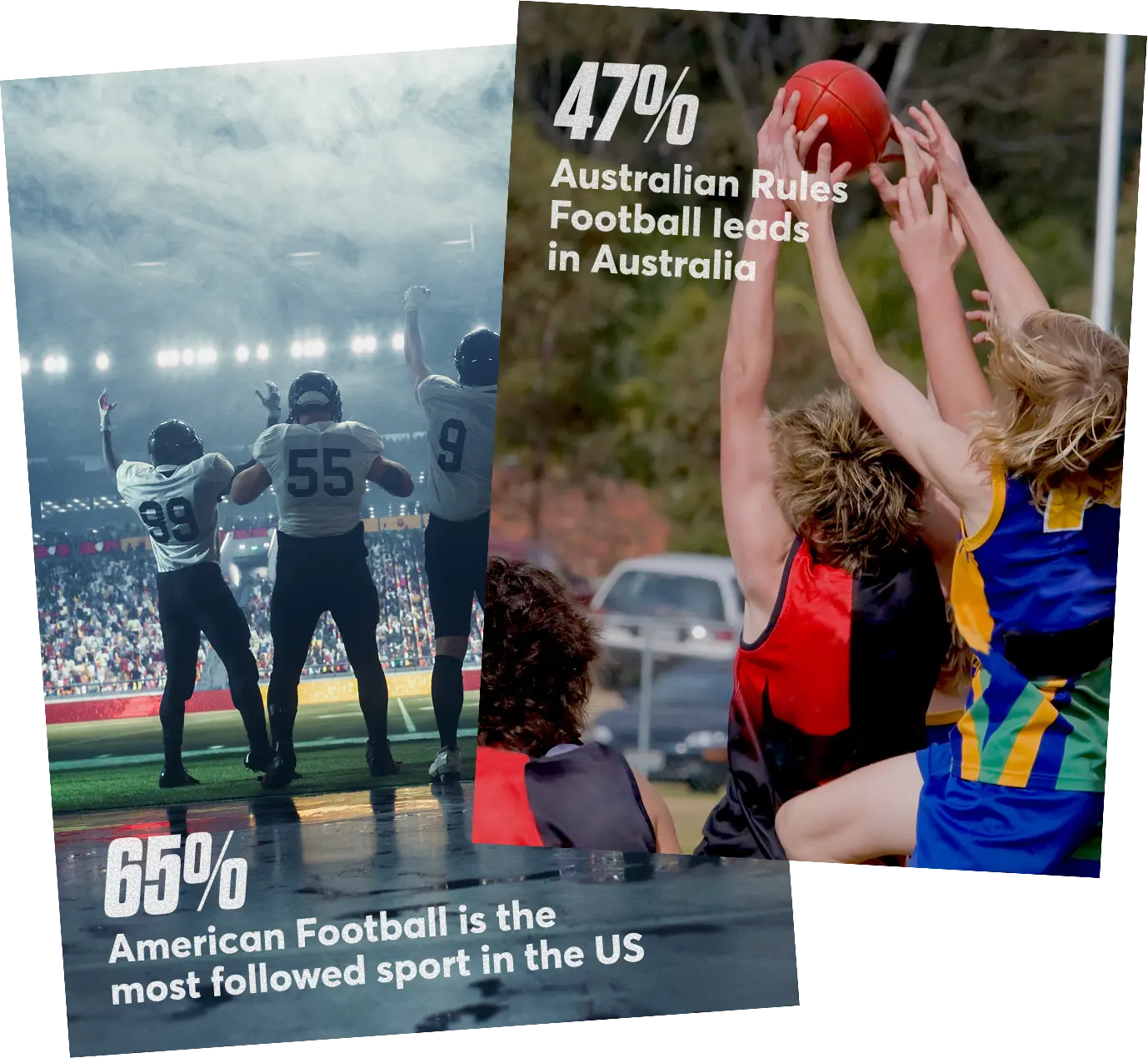
But live sport is not shaped by global trends alone. In other markets, local sporting identities remain just as powerful. In the US, fandom is more fragmented, with American football and basketball each followed by 65% of fans. In Australia, Australian Rules Football leads with 47%, ahead of football. In Ireland, football is followed by Gaelic Games including Gaelic Football and Hurling with 49%.
Fans may be exposed to more international sport than ever before, but what they follow most closely is still heavily influenced by the culture of their home market.
while fandom is becoming more global, live behaviour is still deeply local.
Global Insights 02
Investing in the live experience

Most fans would spendto watch a fixture live
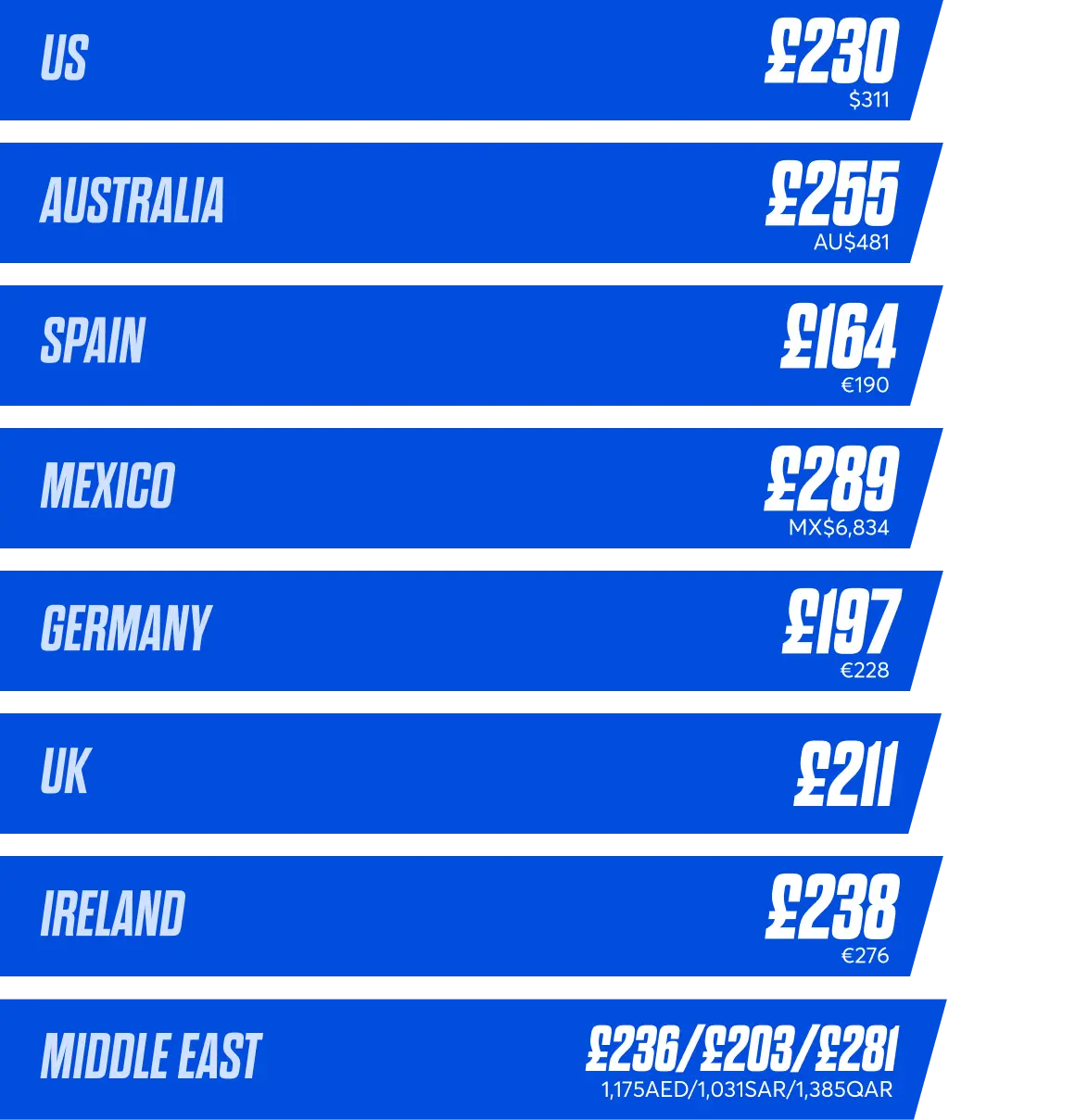
*Question asked in local currency, figure based on equivalent £ value according to conversion rate on 5 May
value is about more than cost
Fans across markets are willing to invest in live sport, but what they value most is not always the same.
Average spend per event is broadly similar across several markets, from $311 in the US, AU$481 in Australia and €190 in Spain, to 6,000 pesos in Mexico. But the bigger takeaway is not the number itself – it is what that spend represents in each market, and what fans expect in return.
In some markets, that means added benefits and enhanced experiences. In others, it is about making live sport feel accessible and worthwhile. For organisers, the opportunity is to recognise that value is not one-size-fits-all.
different audiences will respond to different types of live experience
Global Insights 03
A game of two halves: Upgrade vs accessible
As live sport evolves, fans are not all looking for the same thing.
Broadly, the audience is splitting in two: some want a more elevated, premium experience, while others are focused on keeping live sport accessible.
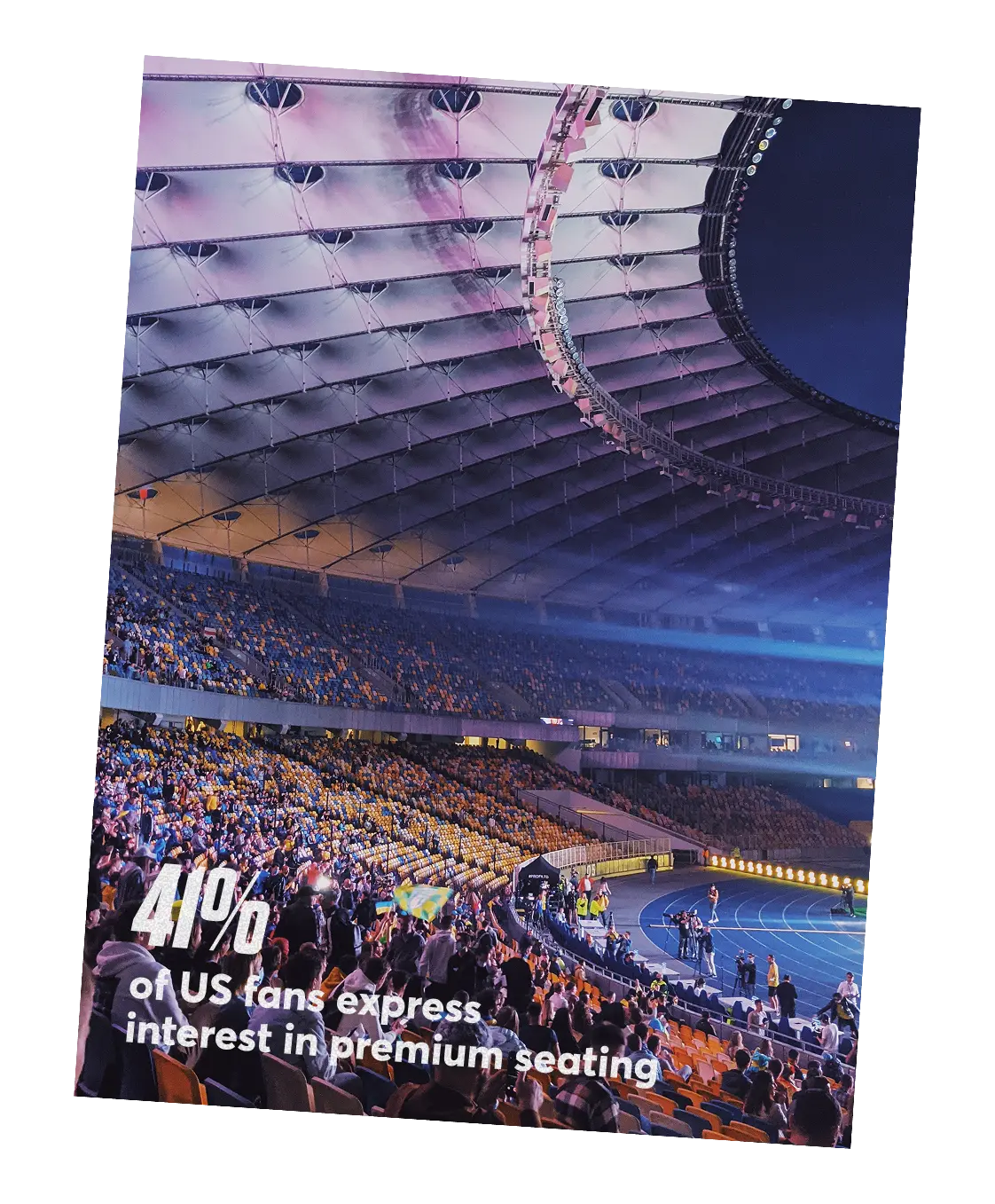
In some markets, there is clear demand for enhanced experiences. In the US, 41% of fans are interested in premium seating, while appetite for VIP experiences is also strong in Spain (34%) and Mexico (38%). These fans are looking for added comfort, exclusivity and a more distinctive event experience.
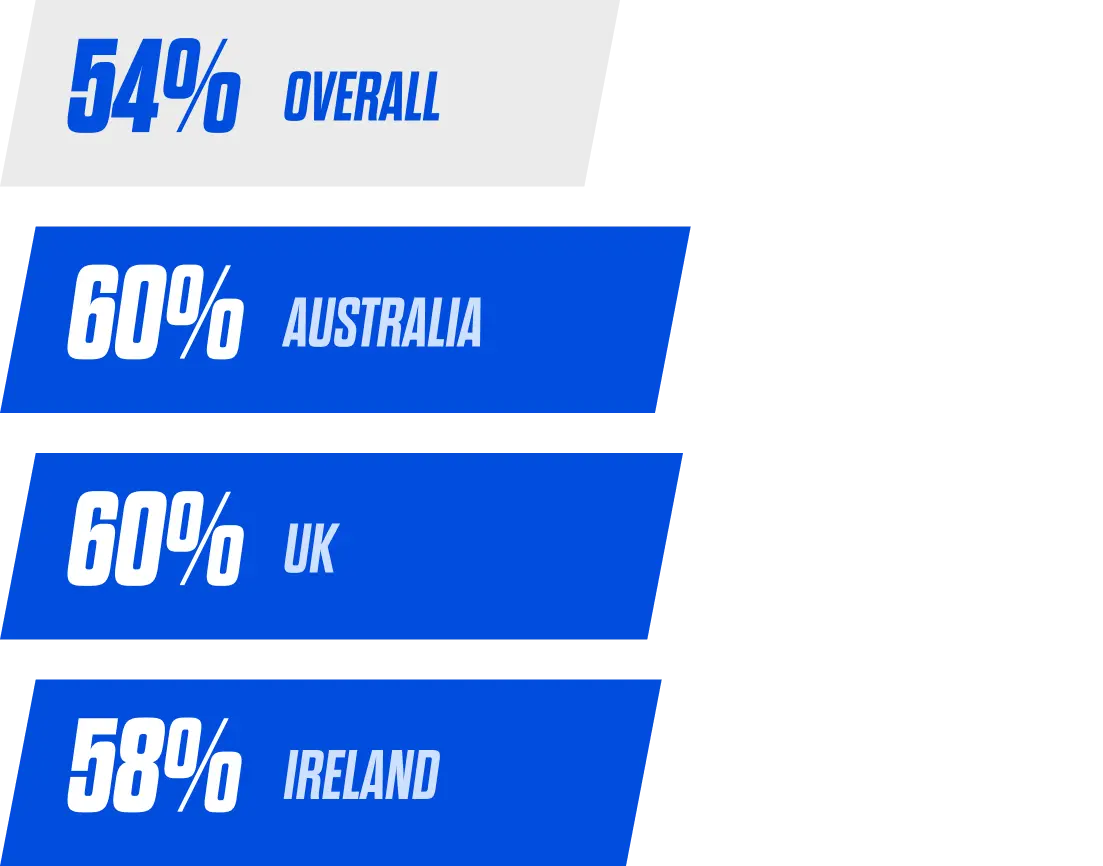
In other markets, affordability matters more. In Australia, 60% of fans prioritise cost, alongside 58% in Ireland and 46% in the Middle East. For these audiences, the priority is making sure live sport continues to feel within reach.
The most effective live offer is likely to be a layered one, with accessible entry points for value-conscious fans and premium options for those willing to trade up.

Top Markets where Fans prioritise cost:
Top Markets where Fans Are interested in VIP:

“FOR A LOT OF FANS, SPORT IS NOT JUST ABOUT THE COMPETITIVENESS - IT’S ABOUT THE FULL EXPERIENCE AROUND IT. AS THE EXPERIENCE ECONOMY CONTINUES TO GROW, THERE’S AN INCREASING EXPECTATION FOR HIGH-IMPACT, CULTURALLY RELEVANT EVENTS THAT CONNECT WITH FANS BEYOND THE SPORT ITSELF, CREATING TRUE “YOU HAD TO BE THERE” MOMENTS. FOR RIGHTS HOLDERS, THIS SHIFT REPRESENTS A POWERFUL ADVANTAGE: THE ABILITY TO DEEPEN FAN ENGAGEMENT, UNLOCK NEW REVENUE STREAMS, AND EXTEND THE VALUE OF THEIR PROPERTIES FAR BEYOND THE CORE COMPETITION.”
JAMES MASSING,
SVP OF SPECIAL OPERATIONS AT LIVE NATION

Travel is becoming a defining behaviour of modern fandom.
Across markets, fans are willing to spend significant time getting to live sport, from around 7 hours in Australia to 6 hours and 56 minutes in Mexico to around 5 hours in Spain and 5 hours and 12 minutes in Ireland.
Live sport is increasingly becoming a reason to travel, not just something to attend locally. For clubs, venues and organisers, that opens up new opportunities to package events as broader destination experiences, built around more than just the fixture itself.




Live sport attracts fans across age groups, but they do not all engage in the same way.
Younger audiences are highly visible and digitally active, with strong levels of live viewing and social-first consumption. They play an important role in discovery, conversation and the cultural visibility of sport.
But when it comes to consistency, mid-life audiences remain the core of the live sports market. From their mid-thirties onwards, engagement becomes more embedded, with higher levels of live viewing and more dependable attendance behaviour.
Globally, younger audiences make up a large share of sports fans overall. But it is the 30–44 audience that remains especially important to the live sports market: financially established, behaviourally consistent and more likely to spend across tickets, subscriptions and experiences. The picture is therefore not of one “future fan”, but of different generations playing different roles in the live sports ecosystem.
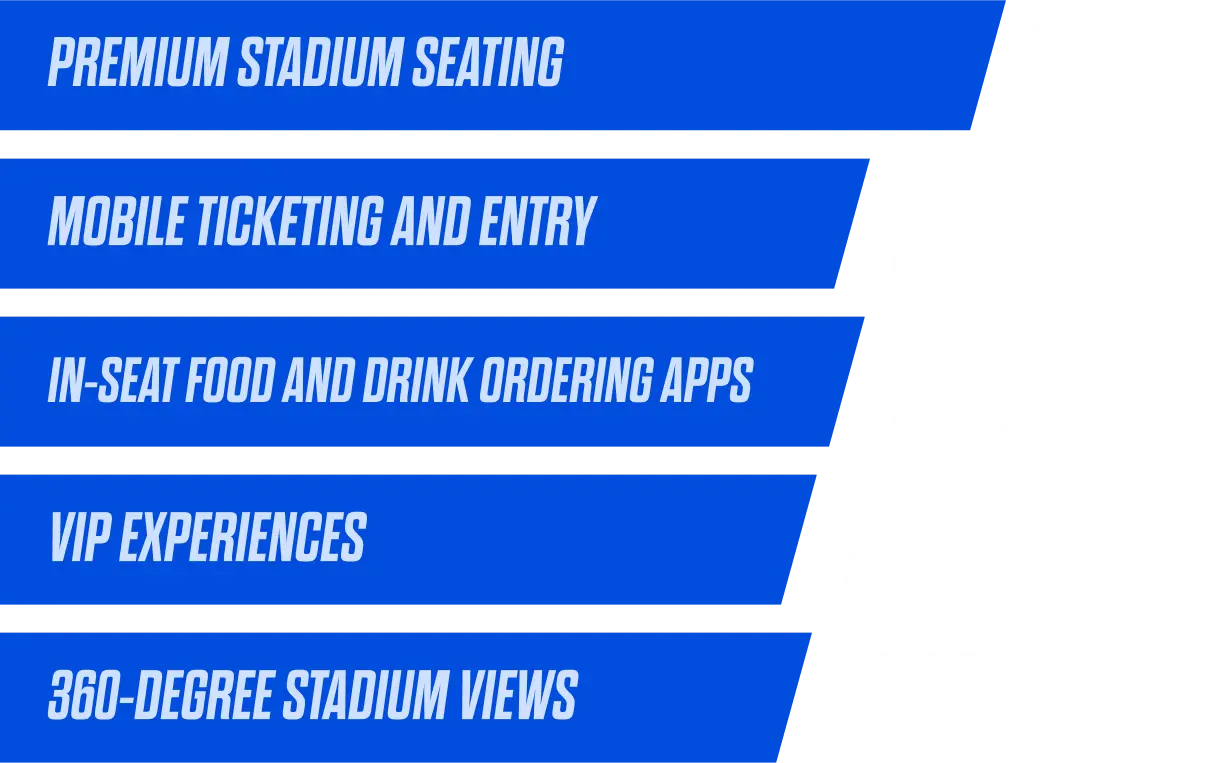
As expectations of live sport evolve, technology is becoming a more important part of the overall fan experience.
In the Middle East, 43% of fans say mobile ticketing would enhance their experience, while 31% of Spanish fans say the same. In the US, 40% are interested in in-seat food and drink ordering, underlining a wider appetite for convenience and smoother in-venue service.
These signals point to a broader shift in expectation. Fans are no longer judging live sport only against other sporting events, but against the best experiences across entertainment, retail and hospitality. Ease, speed and seamlessness increasingly matter at every stage, from ticket purchase and venue entry to food, drink and in-seat service.
That means technology is no longer just an added extra. Mobile-first journeys, seamless entry and integrated services are becoming an essential part of delivering the kind of live experience fans now expect.



Top Features enhancing the live sports Experience According to fans worldwide
Global Insights 07
The 2026 world cup
To explore how fan loyalties shift during major tournaments, we asked fans which team they would support at the World Cup if their own team was knocked out…
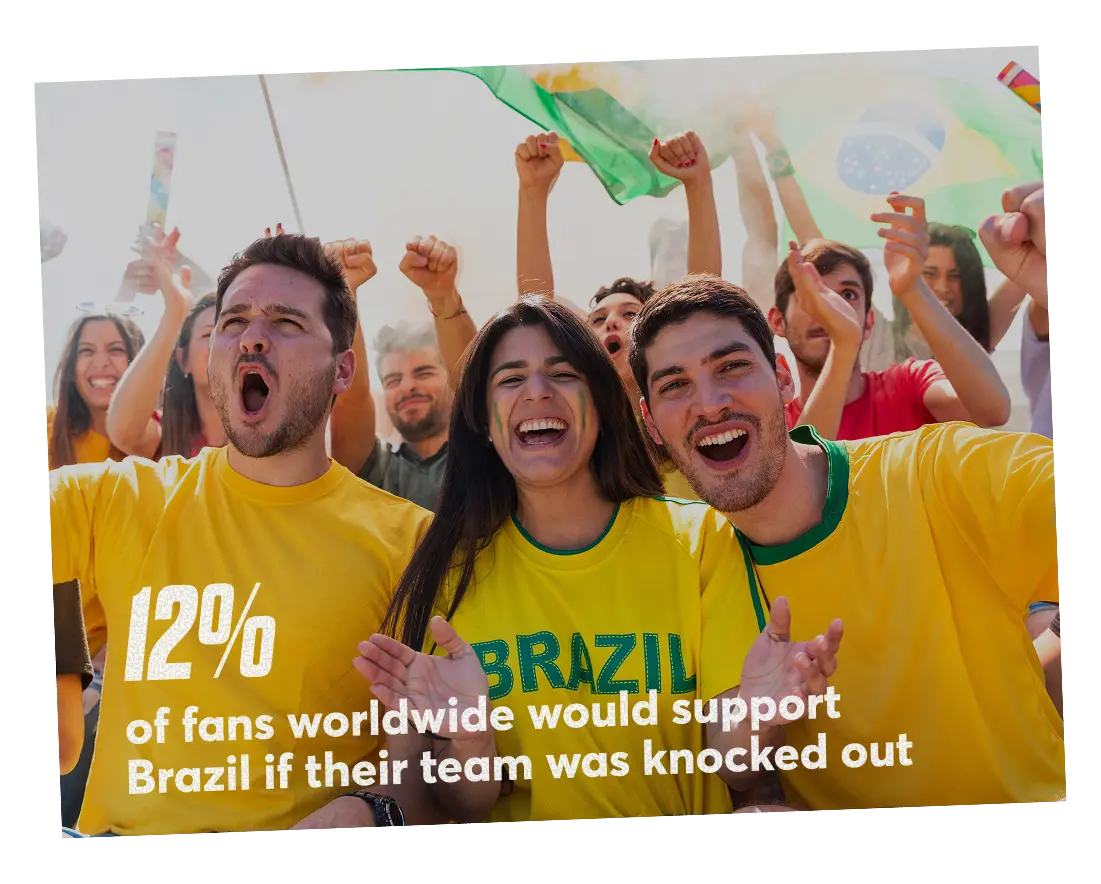
Brazil is the Top team Fans WORLDWIDE would support at the world cup if theirs was knocked out
Worldwide

Top teams fans worldwide would support at the world cup if theirs was knocked out

Australia

Top teams Australian fans would support at the world cup if theirs was knocked out
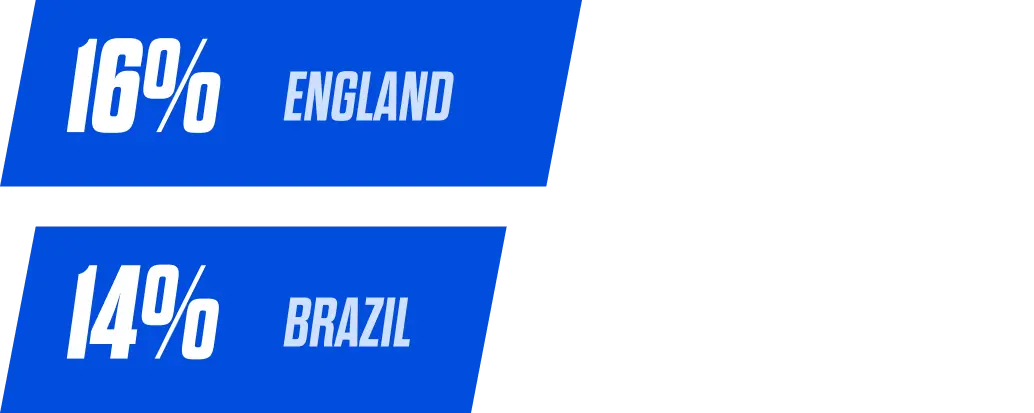
UK

Top teams UK fans would support at the world cup if theirs was knocked out

US

Top teams US fans would support at the world cup if theirs was knocked out
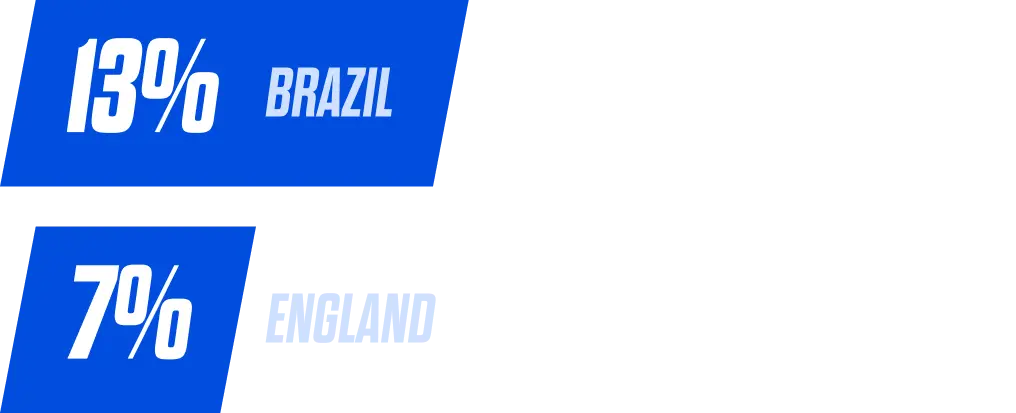
Spain

Top teams Spanish fans would support at the world cup if theirs was knocked out
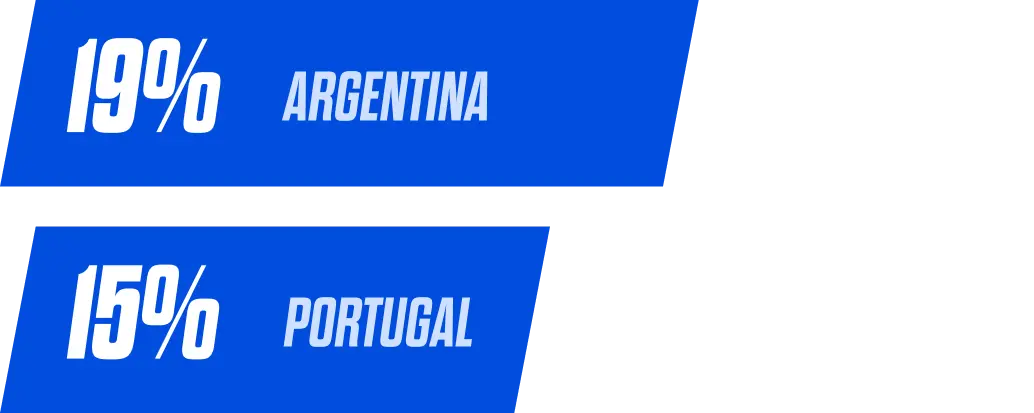
Middle East

Top teams Middle Eastern fans would support at the world cup if theirs was knocked out
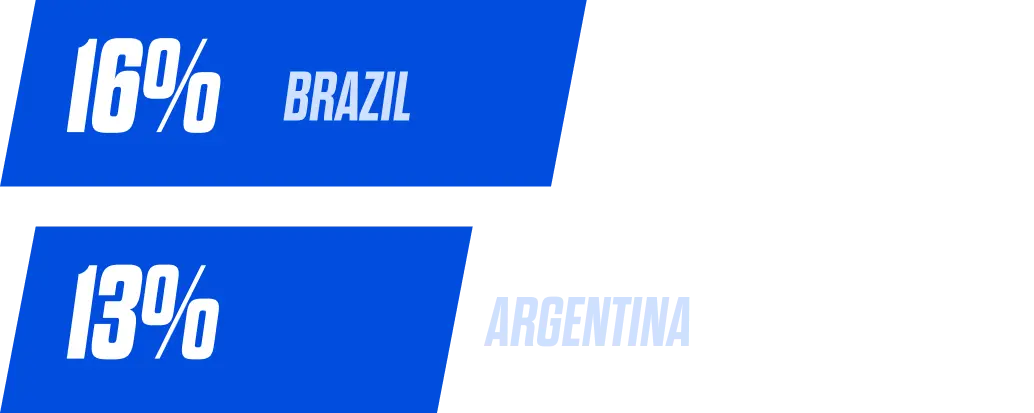
Mexico

Top teams Mexican fans would support at the world cup if theirs was knocked out

Ireland

Top teams Irish fans would support at the world cup if theirs was knocked out

Germany

Top teams German fans would support at the world cup if theirs was knocked out

Research conducted on behalf of Ticketmaster by OnePoll between 25th February to 12th March 2026 with a sample of 15,000 sports fans across the UK (2,000), the US (2,000), Australia (2,000), Germany (2,000), Spain (2,000), Mexico (2,000), Ireland (1,500) and the Middle East (UAE, Qatar, Saudi Arabia; 500 each)